Inflatable Travel Pillows: Portability vs. Support
Analyzing air bladder materials, pressure dynamics at altitude, and the undeniable advantage of ultra-compact packing.
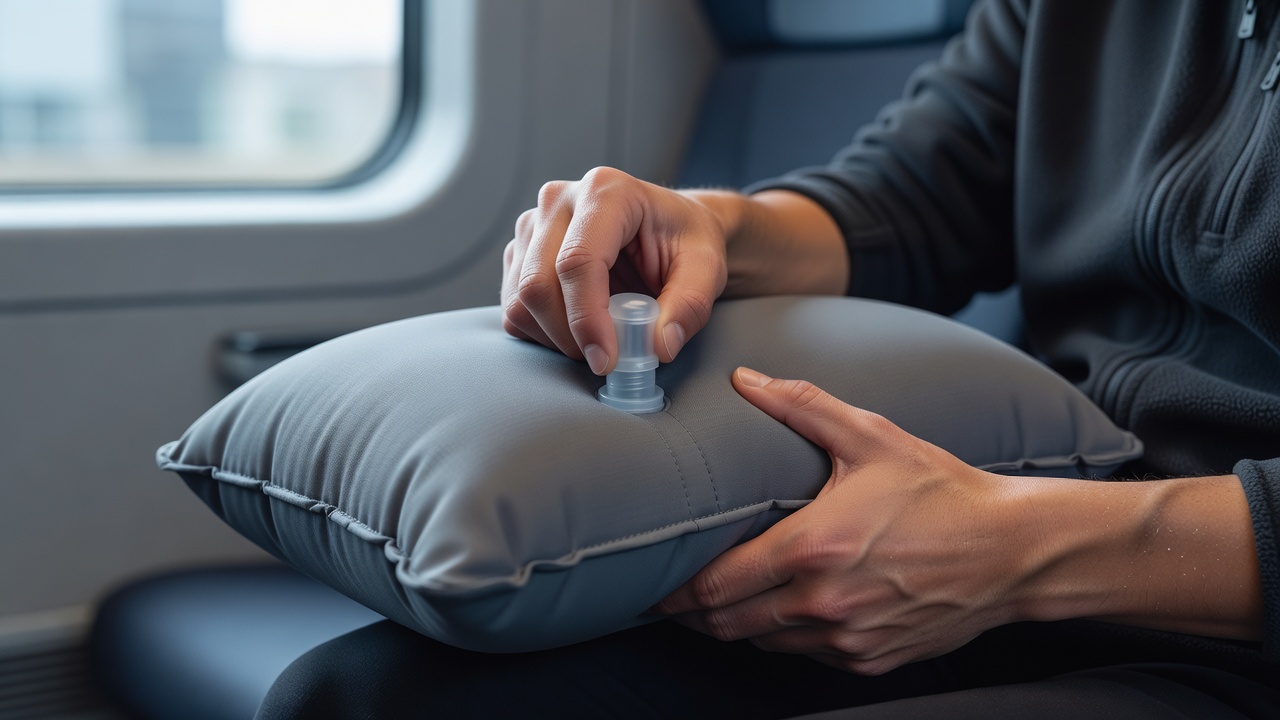
The Mechanics of Air-Filled Neck Support
For the minimalist traveler, bulk is the enemy. The core appeal of the inflatable neck pillow is its ability to transition from a fully supportive cervical brace to a flat, pocket-sized layer of fabric in seconds. However, the physics of supporting a human head—which weighs between 10 to 11 pounds—using only trapped air presents unique engineering challenges.
Unlike memory foam, which displaces weight evenly, a single-chamber air pillow acts as a balloon. When the head exerts downward pressure on one side, the air is forced to the opposite side, potentially altering the shape and creating uneven support. Modern designs attempt to solve this through internal baffling and multi-chamber construction.
Materials: PVC vs. TPU Bladders
The internal bladder is the heart of an inflatable pillow. Historically, these were made from Polyvinyl Chloride (PVC). While inexpensive, PVC is prone to micro-punctures, stiffens in cold weather, and can emit a strong chemical odor due to off-gassing plasticizers. Furthermore, the heat-welded seams on PVC bladders are a common point of failure under stress.
Today, higher-tier inflatable pillows utilize Thermoplastic Polyurethane (TPU). TPU is significantly lighter, more elastic, and vastly more durable than PVC. It handles temperature fluctuations better and resists the oils from skin and hair. If longevity is a priority, confirming the internal bladder is made of TPU rather than standard PVC is essential.
Air Pressure Dynamics at Altitude
A frequently overlooked aspect of inflatable travel pillows is Boyle's Law. As an airplane ascends to cruising altitude, cabin pressure drops (typically pressurized to the equivalent of 6,000 to 8,000 feet above sea level). As ambient pressure decreases, the air trapped inside your sealed pillow expands.
If you fully inflate your neck pillow while sitting on the tarmac, it will likely become rock-hard and deeply uncomfortable midway through the flight, putting excessive strain on the bladder's seams. The optimal approach is to inflate the pillow to roughly 70-80% capacity on the ground, allowing room for the air to expand at altitude, resulting in a softer, more accommodating cushion.
Valve Technologies
The method of inflation has evolved rapidly. The traditional pinch-and-blow valve is being phased out in favor of two superior systems:
- Large-Aperture One-Way Valves: These wide valves feature an internal flap that prevents air from escaping while you blow. They allow full inflation in just two or three breaths and instant deflation with the press of a button.
- Integrated Micro-Pumps: Some models incorporate a compressible bulb directly into the fabric. By repeatedly pressing the bulb, the pillow inflates without the need for mouth contact—an excellent feature for hygiene-conscious travelers.
Advantages of Inflatables
- Ultimate portability. Can fold down to the size of a soda can.
- Adjustable firmness. Simply release air to find the preferred density.
- Lightweight, adding virtually zero burden to carry-on baggage.
- Outer covers (usually micro-velvet or fleece) are easily removable and washable.
Disadvantages of Inflatables
- Prone to punctures and seam leaks over time.
- Air shifting can create a bouncy, less stable feeling than solid foam.
- Requires manual effort to set up and adjust during the trip.
- Can become uncomfortably firm as cabin pressure changes.