Beyond the U-Shape: Advanced Ergonomic Designs
Why the classic horseshoe design is fundamentally flawed, and how modern geometry solves the chin-drop problem.
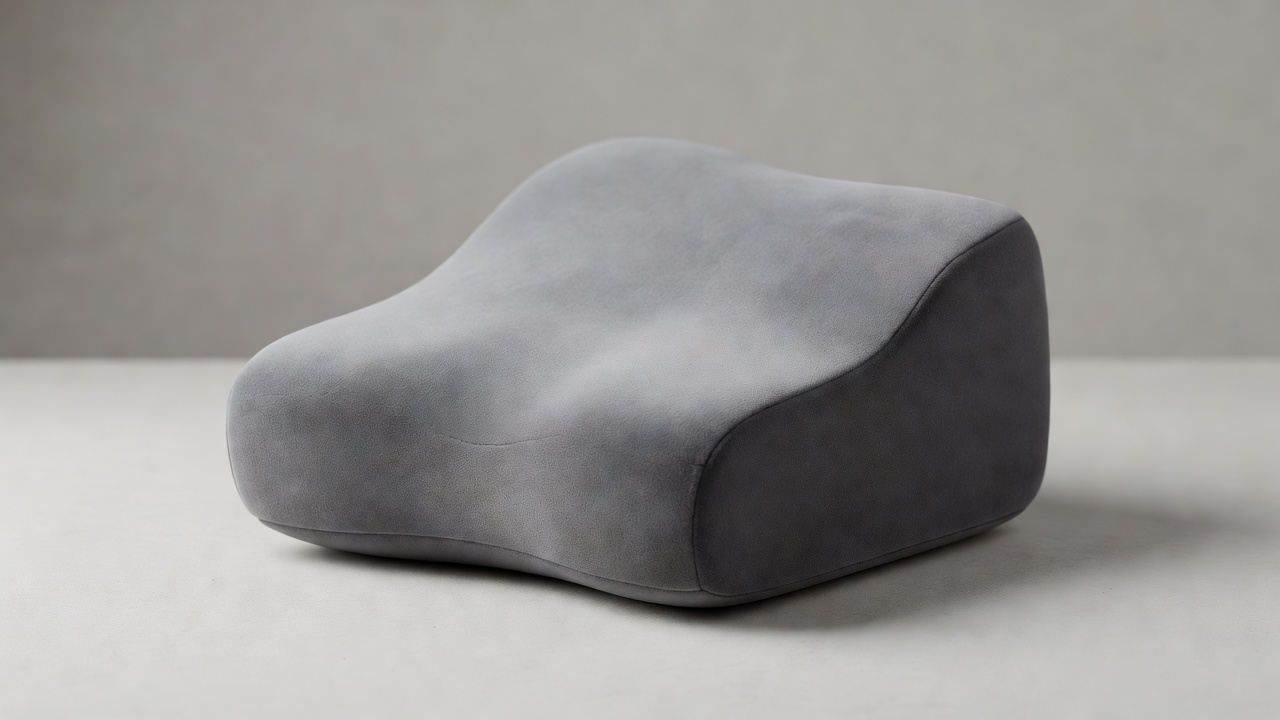
The Flaw in the Classic U-Shape
For decades, the standard travel pillow was a simple U-shape filled with foam or microbeads. While easy to manufacture, the U-shape ignores basic cervical anatomy and the realities of modern seating. The classic design typically features equal thickness all the way around, which creates two significant ergonomic failures.
First, the thick material at the back of the neck pushes the head forward. Because airplane and train seats already pitch the head slightly forward, adding a bulky cylinder behind the neck exaggerates this angle, putting immense strain on the posterior cervical muscles. Second, the open gap at the front fails to prevent the head from falling forward during deep sleep—a phenomenon known as the "chin-drop."
The Flat-Back Revolution
To counter the forward-pitch issue, ergonomic designers introduced the flat-back construction. These pillows drastically reduce the volume of material resting against the nape of the neck. Instead of a thick roll, a flat strap or a very thin contour of foam bridges the left and right lobes.
This allows the user's head to rest flush against the seat's headrest, maintaining a neutral spinal alignment. The bulk of the support is shifted to where it is actually needed: the lateral sides and the anterior (front) of the neck.
Overcoming Chin-Drop: Raised Lateral and Front Support
When muscle tone relaxes during REM sleep, gravity inevitably pulls the heavy skull in whichever direction it leans. To prevent painful hyperextension, ergonomic pillows employ several geometric strategies:
- Asymmetrical Lateral Lobes: Rather than uniform tubes, modern pillows feature raised side panels that extend upward toward the ear. This limits the degree of lateral tilt, supporting the head at a slight, comfortable angle rather than allowing it to flop to the shoulder.
- Overlap and Clasp Systems: To prevent forward chin-drop, many ergonomic pillows are designed to wrap fully around the neck. They utilize adjustable toggles, magnetic clasps, or hook-and-loop fasteners to pull the lobes tightly under the chin. This creates a 360-degree supportive collar that braces the jawbone, transferring the weight of the head through the pillow to the collarbones.
- Scarf and Brace Designs: Moving completely away from the U-shape, some designs hide a rigid internal plastic framework inside a fleece scarf. The user wraps the scarf around the neck, positioning the rigid rib under the jaw. This relies entirely on structural bracing rather than bulk cushioning.
Choosing the Right Ergonomic Geometry
Selecting the right design depends heavily on the user's sleep tendencies. Back sleepers who find their head falling forward benefit most from overlapping 360-degree collars or rigid scarf frames. Side sleepers generally require pronounced lateral lobes to prevent extreme neck bending. In all cases, selecting a design with a flattened posterior section is vital for those traveling in high-backed, upright seats.